
How to Choose the Right GSM Hoodie for Your Brand?
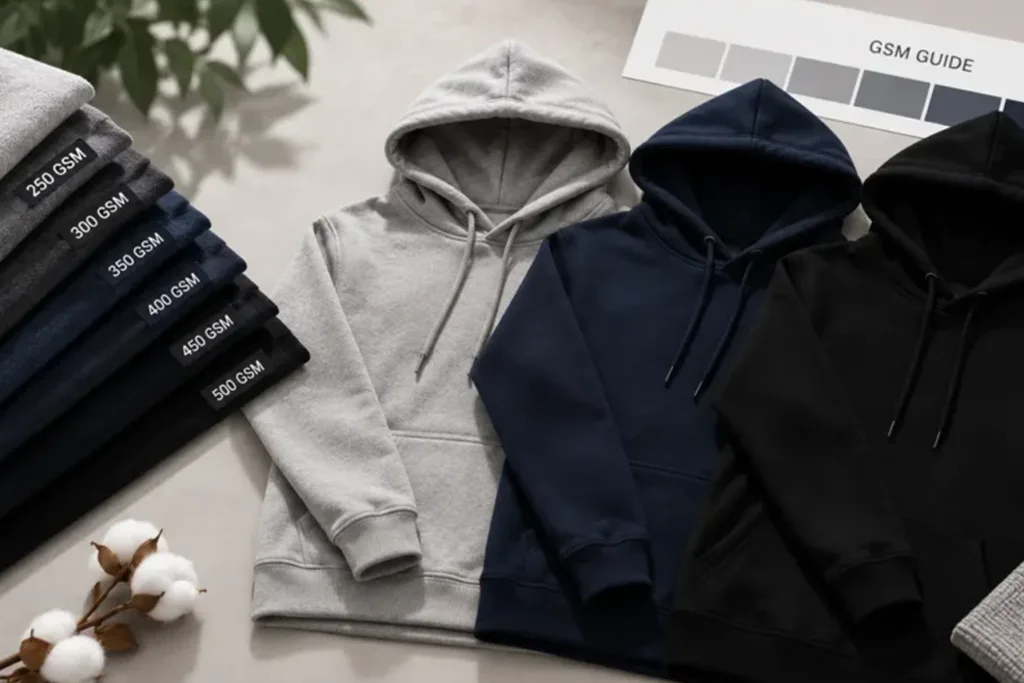
Choosing the right GSM hoodie is one of the most important decisions when building a clothing brand. GSM influences how your hoodie feels, performs, and represents your brand in the market. A wrong choice can lead to poor customer experience, while the right one can elevate your brand’s perceived value. This guide explains GSM in detail and helps you choose the most suitable option based on your brand type, audience, and printing needs. What Does GSM Mean in Hoodies? Definition of GSM in Simple Words GSM stands for grams per square meter. It measures the weight of the fabric used in a hoodie and gives you a clear idea of how thick or thin the material is. A lower GSM hoodie feels lighter and more breathable, while a higher GSM hoodie feels thicker, denser, and often more premium. It is a simple but powerful way to compare fabric quality. Why GSM Matters in Apparel Quality GSM plays a major role in how customers perceive your product. Heavier hoodies often feel more durable and high-end, while lighter ones feel casual and flexible. However, GSM alone does not define quality. It works together with fabric composition and finishing. For a brand, choosing the right GSM means balancing durability, comfort, and cost. It also ensures that your product matches customer expectations in terms of feel and performance. Different GSM Ranges Explained Understanding GSM ranges helps you align your hoodie selection with your brand positioning and target market. 1. Lightweight Hoodies (200–250 GSM) Lightweight hoodies are designed for comfort and breathability. They are ideal for warmer climates or customers who prefer layering without feeling bulky. These hoodies are easier to wear throughout the year and are often more affordable to produce. However, they may not offer the same durability or premium feel as heavier options. They are also less suitable for bold or heavy printing techniques. 2. Midweight Hoodies (260–300 GSM) Midweight hoodies are the most versatile option and are widely used across different types of brands. They provide a balanced feel, not too heavy and not too light. This range offers good durability, comfort, and print compatibility. It works well for everyday wear and suits a wide audience. For many brands, this is the safest starting point because it meets both quality and budget expectations. 3. Heavyweight Hoodies (320+ GSM) Heavyweight hoodies are known for their premium feel and strong structure. They are thicker, warmer, and more durable, making them ideal for colder weather and high-end collections. These hoodies are often used by streetwear brands to create a bold and oversized look. While they offer excellent quality, they come at a higher production cost and may not be suitable for hot climates. How GSM Affects Hoodie Quality 1. Fabric Thickness and Durability GSM directly affects how long a hoodie lasts. Higher GSM fabrics are thicker and more resistant to wear and tear. They maintain their shape better after multiple washes and give a more structured appearance. Lower GSM fabrics, while comfortable, may stretch out over time and show signs of wear more quickly. If long-term durability is important for your brand, it is better to stay within the mid to high GSM range. 2. Comfort and Feel Comfort depends on both GSM and the type of fabric used. Lightweight hoodies feel soft and breathable, making them ideal for daily wear in warmer conditions. Midweight hoodies provide a balanced feel that works in most environments. Heavyweight hoodies offer a cozy and substantial feel, which many customers associate with quality. However, they can feel too warm if worn in hot weather. This is why understanding your audience and climate is important. 3. Printing Results (DTG, DTF, Screen Printing) GSM plays a key role in how well your designs appear on the hoodie. Thicker fabrics provide a more stable surface, which helps in achieving clean and sharp prints. Lightweight fabrics can sometimes lead to uneven prints or ink absorption issues. On the other hand, midweight and heavyweight hoodies handle printing techniques much better, especially for bold graphics and detailed designs. Which GSM is Best for Your Brand Type? 1. Streetwear Brands Streetwear brands usually focus on strong visual identity and premium feel. For this reason, they often use hoodies in the 300 to 400 GSM range. This creates a structured look that works well with oversized fits and bold designs. Customers in this segment often expect heavier, high-quality garments. 2. Gym & Active wear Brands For gym and active wear brands, comfort and flexibility are more important than thickness. Hoodies in the 220 to 280 GSM range are ideal because they are lightweight and breathable. They allow easy movement and can be worn during workouts or as layering pieces. Heavier fabrics are usually avoided in this category. 3. Winter Clothing Brands Winter brands benefit from using 320 GSM and above. These hoodies provide warmth and insulation, making them suitable for colder conditions. They also create a cozy and premium feel that aligns well with seasonal demand. Adding fleece lining can further enhance comfort. 4. Merch & Printing Businesses Merchandise and printing businesses often prioritize cost efficiency and consistent results. A GSM range of 260 to 300 works best in this case. It offers a good balance between affordability, durability, and print quality. This range is also suitable for bulk production. Best GSM for Printing Hoodies 1. GSM for DTG Printing DTG printing works best on smooth and stable fabrics. Hoodies in the 260 to 300 GSM range are ideal because they absorb ink evenly and allow detailed designs to stand out clearly. Cotton-rich fabrics are especially effective for this method. 2. GSM for DTF Printing DTF printing is more flexible and works on different fabric types. However, using midweight hoodies between 240 and 320 GSM ensures better adhesion and durability. This range also reduces the chances of wrinkles during heat pressing. 3. GSM for Screen Printing Screen printing requires a stable and thick surface to handle layers of ink. Hoodies in the 280 to 350 GSM